

A guide to navigating your obligations under the Fair Trading Act
The Fair Trading Act (the Act) protects consumers against being misled or treated unfairly by traders or shops. The Act also requires businesses to provide specific information about their goods and services to consumers and adhere to safety standards.
It is important that your business complies with the Fair Trading Act and provides consumers with accurate information. Pricing and advertising should not mislead or deceive consumers, intentionally or unintentionally. Consumers are easily persuaded to make purchasing decisions by advertising or a seemingly good price for products and services.
What is the Fair Trading Act
The Fair Trading Act, regulated by the Commerce Commission, aims to protect consumers from misleading and deceptive conduct, unfair trading practices, and to promote the disclosure of consumer information and product safety.
The Act applies to all commercial activities, trades, professions and businesses. This includes online sales. It also applies to everything involved in the promotion and sale of a good or service, including advertising, pricing and even sale methods.
As a retailer, you cannot contract out of your obligations to consumers under the Act. However, there are some exceptions when dealing with other traders where you may be able to contract out, should you agree. You can find out more about that process and the requirements on the Commerce Commission’s website.

Watch our webinar on Avoiding Breaches under the FTA
Our legal partner, Ford Sumner Lawyers, reviews common mistakes that employers can avoid to ensure compliance with the Fair Trading Act.
Your responsibilities
As a business, you must not mislead or deceive consumers about the things you sell, including anything that is written or said about the product or service. This includes advertising, impressions from images and information that is left out that may create a false or misleading impression.
It is of no material difference if you did not intend to mislead. You cannot rely on things such as fine print to correct any potentially misleading impressions or to hide important information. Misleading advertising includes print, TV, radio, online or digital and social media.
Additionally, you are required to adhere to specific product and service standards regarding safety and communication of certain information, as dictated by the regulations for your specific products or services.
Retail NZ has prepared this guide to take you through the basics of the Fair Trading Act. However, retailers should not rely solely on this resource, as there may be specific circumstances that pertain to your business that are not covered here.
For further guidance and detailed information, retailers should:
- Refer to the Fair Trading Act legislation,
- Refer to guidance provided on the Commerce Commission’s website, and
- Where necessary, seek legal advice on how the law applies to your specific circumstances.
Misleading pricing under the Fair Trading Act
The Act gives consumers the right to clear and accurate pricing for products and services, in addition to factual advertising.
Examples of ways a consumer can be deceived or misled by advertising includes:
- making claims about products without evidence to substantiate the claim
- writing or saying anything false about products or services
- unfair sale practices, such as bait advertising (luring a customer in with cheap products that are unavailable, then offering them a more expensive product instead)
- was/now pricing can be misleading to consumers if the ‘was’ price advertised was never the price the good or service was sold for. This is especially true for outlet stores or retailers who offer older or discontinued stock.
Example 1: An outlet retailer advertising last season’s outdoor dining set as ‘WAS $1899; NOW $1099’ is misleading if the outlet retailer never sold the item at the advertised price of $1899.
Example 2: A retailer sells an item for $100 and applies a 50% discount for a prolonged period. The ‘usual selling price’ has now become $50. The retailer then wants to sell that item for $25. The retailer would not be able to claim this is a 75% discount.
Tips for planning price promotions and discounts
Any representations a business makes about price must be clear, accurate and unambiguous. Here are some tips to help retailers understand sale, promotion and discounted pricing.
When planning for price promotions:
Usual selling price
Businesses often discount goods and services by advertising the savings consumers can make when purchasing at the discounted price. This is frequently done by comparing the discounted price with the non-sale price. The non-sale price of a good or service is often referred to as the ‘usual selling price’ or is referred to by ‘was/now’ pricing, ‘normal’ or ‘everyday’ price.
However, if you make these types of claims, you might mislead consumers if:
- you have never charged the ‘usual selling price’
- you deliberately inflate the ‘usual selling price’
- your claimed ‘usual’ price is one of many prices at which the good or service is commonly sold or is very rarely the selling price.
If you routinely sell products at a promotional price, then the promotional price becomes the usual selling price.
A RRP (recommended retail price) is usually the price manufacturers suggest a retailer sells their products for. You are under no legal obligation to sell a product at the RRP, and many will often sell below the RRP.
It is misleading to consumers for retailers to make a comparison during a sale period with an RRP if it is not a genuine manufacturer’s RRP or if the item is not usually sold at that suggested RRP.
Sale and pricing advertising
Ensure that all advertisements are clear to customers and do not mislead them. You can price items however you like, but when advertising items at a sale/reduced/special price, your business must comply with the below rules and guidelines.

Consumer information standards
The Fair Trading Act requires that businesses disclose certain details about goods and services to help consumers make safe and healthy choices. Consumers should be able to easily view the required information, typically on the product label. The Act currently provides regulations for seven categories:
Each regulation refers to detailed standards specific to the product; it is your responsibility to familiarise yourself with these standards and ensure that your business complies. You can purchase the full standards for your relevant product or service from Standards NZ. Below is our summary of the regulations under the Fair Trading Act.

Care labelling
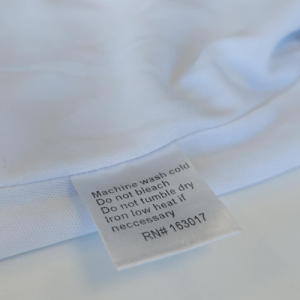
Under the Fair Trading Act, new clothing, household fabrics and furnishings must have a label that details information about how to care for that type of good. Sharing this information with consumers helps them understand how to care for textile goods and the associated costs when making a purchase. By adhering to the care instructions, the items are less likely to get damaged or ruined and are more likely to have a longer lifespan.
The Consumer Information Standards (Care Labelling) Regulations outline all of the product categories which must adhere to care labelling standards, as well as specific products in these categories which are excluded from the regulations.
Country of Origin
New clothing and footwear must include permanent labels that can be seen by prospective buyers that specify where the product was made. This enables consumers to make informed decisions about the products they buy and use.
Consumer Information Standards (Country of Origin (Clothing and Footwear) Labelling) Regulations 1992 outline the types of products the standards cover, and which items are excluded from the requirement. Regulations also include details regarding how labels must be affixed to regulated items, as well as the formatting and legibility of label text.
Fibre content labelling
To comply with industry standards and regulations, all clothing and fabric products must include labels that clearly list the types of fibres used, along with their respective percentages or quantities. This transparency ensures that consumers are well-informed about the fibre content of their purchases, enabling them to use and care for the products appropriately.
Consumer Information Standards (Fibre Content Labelling) Regulations outline the products which are included and excluded from labelling standards for many textile products. The standards for fibre content labelling include methods of designating and assessing fibre content, as well as specifying the way in which the product must be labelled.
Unit pricing for grocery products
To comply with Unit Pricing Regulations that came into effect in August 2023, certain grocery retailers must display the unit price for products. This applies to any grocery retailer with internal floor space of over 1000 square metres and selling the products specified in the regulations (see below).
Consumer Information Standards (Unit Pricing for Grocery Products) Regulations 2023 outline the products which are included and excluded from unit pricing requirements, and specifies the requirements for how unit pricing is displayed. The Commerce Commission also provides a detailed guide to unit pricing regulations for grocery retailers.
Used motor vehicles
All motor vehicle traders selling used vehicles (except private sellers) must ensure that each vehicle has an accurate and complete Consumer Information Notice (CIN), also known as Supplier Information Notice (SIN), attached. For online sales, the CIN must be prominently displayed within the vehicle’s advertisement.
The CIN provides essential details about the used motor vehicle and the trader, helping consumers make well-informed purchasing decisions. This standardised notice must include specific information to meet regulatory requirements.
Consumer Information Standards (Used Motor Vehicles) Regulations outline the requirements for how the CIN is displayed, formatting and text specifications, and what to do with the CIN after sale.
Water efficiency
In New Zealand, water-using appliances must display water efficiency rating labels when being sold. These labels provide crucial information about a product’s water consumption and efficiency, enabling consumers to make purchasing decisions with regard to sustainability and cost effectiveness.
Consumer Information Standards (Water Efficiency) Regulations specify labelling requirements for certain types of new water-using equipment and outline which products are included in these regulations. Used water-using appliances are not covered by these regulations.
Origin of food
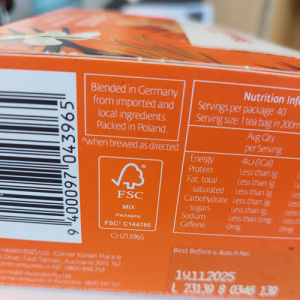
Certain types of food products which are imported into New Zealand must include labels that inform consumers of the country where the food was sourced. Providing this information allows consumers to make informed purchase decisions regarding products they and their families will consume.
Consumer Information Standards (Origin of Food) Regulations specify which food items are included and excluded in the consumer information standards, which details must be communicated to consumers for the regulated food items and how information must be disclosed.
Product safety standards
The Fair Trading Act sets out product safety standards regulations to prevent or reduce the risk of injury.
Examples of what product safety standards may include are:
- the nature of the product and its performance, such as composition, contents, manufacture, processing, design, construction, finish or packaging
- tests the product should go through during or after manufacture
- the form and content of markings, warnings or instructions on the product
Businesses are responsible for maintaining awareness of the safety standards for the products they sell, and ensuring that their products meet those standards. You can purchase the standards for your relevant products from Standards NZ.
Be aware that manufacturers in other countries may have different safety standards from New Zealand, so do your due diligence in selecting suppliers from abroad.
We recommend that you take the following actions to ensure your compliance with product safety requirements under the Fair Trading Act:
Watch our webinar on Product Safety and Recalls
Ian Caplin, Principal Advisor with the Ministry of Business, Innovation and Employment’s Consumer Protection team walks us through critical product safety guidance in this episode of Empowering Retail.
The products that currently have mandatory safety standards are:
Many other products are covered by voluntary safety standards for design features and performance requirements. Even if the products you sell do not have mandatory safety standards, you are still required to ensure that your products are safe for use and fit for purpose. We recommend that businesses conduct safety testing even for unregulated products to protect themselves and their consumers from potential risks. Moreover, obtaining safety certification from an accredited lab can significantly enhance customer attraction and retention.

Baby Walkers
Retailers must ensure all baby walkers sold meet mandatory safety standards for design, construction, and performance. These products must pass safety tests and include clear warning labels, as they can pose injury risks by allowing infants to move in ways they otherwise couldn’t on their own.
This applies to the sale or lease of new or second-hand baby walkers:
- at a shop
- at a garage sale
- at a market
- online.
Product Safety Standards (Baby Walkers) Regulations set sections of American standard ASTM F977-03 as the official product safety standard that suppliers of all new and second-hand baby walkers supplied in New Zealand must comply with.
Bicycles
To reduce the risk of injury, bicycles sold must comply with strict safety standards. These regulations ensure that bikes are built to meet essential design and performance criteria and include clear warning labels to inform users of potential hazards.
The standards are required for two-wheeled, pedal vehicles which are propelled by human effort only (not an engine), with a wheelbase of 640mm or greater. This includes new bicycles sold or leased in-store, online, at a market, or as a give-away.
Product Safety Standards (Pedal Bicycles) Regulations sets AS/NZS 1927:1998 with amendments as the official product safety standard that suppliers of most new bicycles supplied in New Zealand must comply with.
Children’s nightwear
Mandatory safety standards for children’s nightwear are in place to reduce the risk of burn injuries by ensuring garments meet strict flammability and labeling requirements. These regulations help parents make informed choices and protect children from serious harm in the event of exposure to fire.
Product Safety Standard (Children’s Nightwear and Limited Daywear Having Reduced Fire Hazard) Regulations sets AS/NZS 1249:2014 as the official product safety standard that traders of children’s nightwear must comply with.
How children’s nightwear is tested for safety standards
In this video, the Commerce Commission explains how children’s nightwear is tested for NZ safety standards. This guidance can help you determine if your products are safe, or may require further testing before going to market.
Children’s toys
Mandatory safety standards for children’s toys exist to prevent serious injuries, especially choking hazards, in children under 36 months who are more vulnerable due to their limited ability to expel swallowed objects. These standards ensure toys are appropriately sized, free from easily detachable small parts, and have secure battery compartments to protect young children during play.
This applies to new or second-hand children’s toys that are:
- sold through any channel except the private sale of second-hand toys
- ‘give-aways’ such as prizes at sideshow stalls
- toys which are gifts when buying other goods
- toys given away in breakfast cereal packets
- toys sold through internet retail or auction sites – this includes any person in trade supplying second-hand toys.
The Product Safety Standards (Children’s Toys) Regulations sets AS/NZS ISO 8124.1:2002 with amendments as the official product safety standard that traders of children’s toys must comply with.
How children’s toys are tested for safety standards
In this video, the Commerce Commission explains how children’s toys are tested for NZ safety standards. This guidance can help you determine if your products are safe, or may require further testing before going to market.
Cigarette and utility lighters
To reduce the risk of accidental fires, cigarette lighters must meet certain performance, design and labelling standards. Lighters sold in New Zealand must be designed to ensure most children would not be able to operate them.
This applies to new or second-hand disposable and refillable lighters that are:
- Manufactured, imported, or distributed to retailers
- Sold by retailers in-store or online
- Sold by individuals who sell second-hand lighters at markets, auctions, or online
The Product Safety Standards (Cigarette Lighters) Regulations set specific sections of ISO 9994:1995E and American standard CFR 16 Part 1210 with amendments as the official product safety standards that New Zealand retailers must comply with.
Household cots
To help reduce the risk of injury to babies and young children, household cots sold in New Zealand must meet certain design and construction requirements, pass impact, strength and durability tests and have warning labels attached.
The standards are required for free-standing cots with raised sides and ends that are designed as an enclosed sleeping facility for an infant or child. This includes new or used cots which are designed and intended to be used in the home for a child’s or infant’s sleeping use.
Product Safety Standards (Household Cots) Regulations set sections of AS/NZS 2172:2003 with amendments as the product safety standard that suppliers of new and second-hand cots supplied in New Zealand must comply with.
Multipurpose ladders
To minimise the risk of injury, any multipurpose ladder that is sold in New Zealand must meet the requirements of the safety standard to ensure it has been tested to assess its stability, has labels that are easy to read, have warnings applied regarding misuse and electrical hazards.
The safety standards apply to any new portable ladder that has one or more hinges that are capable of being locked in one or more positions, which allow the ladder to be used as:
- a single ladder, with or without a stand-off
- a single or double sided step ladder
- scaffold or work platform
Product Safety Standards (Multipurpose Ladders) Regulations set AS 1892.1:2018 with amendments as the official product safety standard that New Zealand retailers must comply with.
Sunscreen
Sunscreen products sold in New Zealand must meet mandatory safety standards to ensure that consumers can make informed choices about products that may help protect against cancer or sun-related conditions.
Sunscreen products that are covered by mandatory safety standards include:
- Products where their primary purpose is to protect the skin from ultraviolet radiation
- Insect repellents with a labelled SPF of 4 or more
- Skin care products as defined under the safety standard with a labelled SPF greater than 15.
The Sunscreen (Product Safety Standard) Act 2022 sets out AS/NZS 2604:2012 as the official product safety standard that New Zealand retailers must comply with.
Unsafe goods notices
Under the Fair Trading Act, it is unlawful to supply, advertise or offer to supply any goods that don’t comply with an unsafe goods notice. Unsafe goods notices refer to products that are deemed unsafe for use or consumption, such as candles with lead in them, or chainsaws without a chain break. It is good practice to check the current unsafe goods notices before importing new products, as unsafe goods can be seized by Customs and forfeit.
It is your responsibility as the business owner to maintain awareness of current unsafe goods notices, as published by the Minister of Commerce and Consumer Affairs in the New Zealand Gazette, the official government newspaper for New Zealand.
Videos from the Commerce Commission
The Commerce Commission has prepared videos about two products listed under unsafe goods notices, Hot Water Bottles and High-Powered Magnets. Watch these to understand how these products are tested against NZ safety standards. Check the Commerce Commission website to see what other products have unsafe goods notices.
.
Need more information?
We understand that navigating the Fair Trading Act can feel overwhelming. If you would like clarification on anything in this guide, or if you would like advice on a specific situation, do not hesitate to email us at [email protected] or give our Advice Service a call on 0800 472 472 (or 1800 128 086 from Australia).