

Advice

Guide to the Fair Trading Act 

sale sign reflecting shoppers on street

A guide to navigating your obligations under the Fair Trading Act

The Fair Trading Act (the Act) protects consumers against being misled or treated unfairly by traders or shops. The Act also requires businesses to provide specific information about their goods and services to consumers and adhere to safety standards.

It is important that your business complies with the Fair Trading Act and provides consumers with accurate information. Pricing and advertising should not mislead or deceive consumers, intentionally or unintentionally. Consumers are easily persuaded to make purchasing decisions by advertising or a seemingly good price for products and services.  

What is the Fair Trading Act

The Fair Trading Act, regulated by the Commerce Commission, aims to protect consumers from misleading and deceptive conduct, unfair trading practices, and to promote the disclosure of consumer information and product safety.

The Act applies to all commercial activities, trades, professions and businesses. This includes online sales. It also applies to everything involved in the promotion and sale of a good or service, including advertising, pricing and even sale methods. 

As a retailer, you cannot contract out of your obligations to consumers under the Act. However, there are some exceptions when dealing with other traders where you may be able to contract out, should you agree. You can find out more about that process and the requirements on the Commerce Commission’s website

Watch our webinar on Avoiding Breaches under the FTA

Our legal partner, Ford Sumner Lawyers, reviews common mistakes that employers can avoid to ensure compliance with the Fair Trading Act.

Your responsibilities 

As a business, you must not mislead or deceive consumers about the things you sell, including anything that is written or said about the product or service. This includes advertising, impressions from images and information that is left out that may create a false or misleading impression.

It is of no material difference if you did not intend to mislead. You cannot rely on things such as fine print to correct any potentially misleading impressions or to hide important information. Misleading advertising includes print, TV, radio, online or digital and social media. 

Additionally, you are required to adhere to specific product and service standards regarding safety and communication of certain information, as dictated by the regulations for your specific products or services.

Retail NZ has prepared this guide to take you through the basics of the Fair Trading Act. However, retailers should not rely solely on this resource, as there may be specific circumstances that pertain to your business that are not covered here.

For further guidance and detailed information, retailers should:

Misleading pricing under the Fair Trading Act 

The Act gives consumers the right to clear and accurate pricing for products and services, in addition to factual advertising.  

Examples of ways a consumer can be deceived or misled by advertising includes: 

  • making claims about products without evidence to substantiate the claim 
  • writing or saying anything false about products or services 
  • unfair sale practices, such as bait advertising (luring a customer in with cheap products that are unavailable, then offering them a more expensive product instead) 
  • was/now pricing can be misleading to consumers if the ‘was’ price advertised was never the price the good or service was sold for. This is especially true for outlet stores or retailers who offer older or discontinued stock.   

Example 1: An outlet retailer advertising last season’s outdoor dining set as ‘WAS $1899; NOW $1099’ is misleading if the outlet retailer never sold the item at the advertised price of $1899.  

Example 2: A retailer sells an item for $100 and applies a 50% discount for a prolonged period. The ‘usual selling price’ has now become $50. The retailer then wants to sell that item for $25. The retailer would not be able to claim this is a 75% discount. 

Tips for planning price promotions and discounts 

Any representations a business makes about price must be clear, accurate and unambiguous. Here are some tips to help retailers understand sale, promotion and discounted pricing. 

When planning for price promotions:
  • Ensure that discounts are being applied to the usual selling price
  • Be transparent – don’t use fine print to hide important information, such as extra charges or conditions
  • Set a timeframe – a sale is a brief and limited opportunity to buy at a reduced price
  • Use ‘clearance’ sales only for clearing stock
  • Accurately present the savings and the range of discounted goods – do not exaggerate or create false sense of urgency
  • Do your research to ensure that any claims of “lowest ever”, “cheapest prices” or “biggest sale ever” are substantiated

Usual selling price

Businesses often discount goods and services by advertising the savings consumers can make when purchasing at the discounted price. This is frequently done by comparing the discounted price with the non-sale price. The non-sale price of a good or service is often referred to as the ‘usual selling price’ or is referred to by ‘was/now’ pricing, ‘normal’ or ‘everyday’ price.  

However, if you make these types of claims, you might mislead consumers if: 

  • you have never charged the ‘usual selling price’ 
  • you deliberately inflate the ‘usual selling price’ 
  • your claimed ‘usual’ price is one of many prices at which the good or service is commonly sold or is very rarely the selling price. 

If you routinely sell products at a promotional price, then the promotional price becomes the usual selling price.  

A RRP (recommended retail price) is usually the price manufacturers suggest a retailer sells their products for. You are under no legal obligation to sell a product at the RRP, and many will often sell below the RRP.  

It is misleading to consumers for retailers to make a comparison during a sale period with an RRP if it is not a genuine manufacturer’s RRP or if the item is not usually sold at that suggested RRP.  

Sale and pricing advertising 

Ensure that all advertisements are clear to customers and do not mislead them. You can price items however you like, but when advertising items at a sale/reduced/special price, your business must comply with the below rules and guidelines.

  • Take care when promoting goods ordered specifically as sale stock.
  • Clearly distinguish the type of promotion and pricing (e.g. do not use “was/now” pricing for products you haven’t sold before)
  • Clearly show the price comparison of the original price and the new price.
  • Be clear whether ‘was/now’ is a permanent price reduction, or a temporary change.
  • A sale must be for a short duration and only for the period stated.
  • Clearly state how long the special price will last.
  • Return to the normal price after the special price period ends – the ‘sale price’ can become the ‘usual selling price’ if your promotion or sale goes on too long.
  • Consider how frequently you are discounting the same products – if the same item keeps getting discounted frequently over a period of time, the sale price could become the ‘usual selling price’.


Example
: If you had a $100 item that you applied a 50% discount to for a prolonged period, the ‘usual selling price’ would become $50. If you then wanted to sell the item for $25, that would be a 50% discount. You couldn’t claim that it was a 75% discount. 

  • Businesses advertising ‘special offers’ or ‘specials’ must offer something genuinely special, such as lower prices or additional features (e.g., buy X and get a free Y).
  • Ensure that special offers do not mislead consumers.
  • Specify what conditions, if any, are required for the customer to get a special offer, such as:
    • if the offer only applies to specific people (such as loyalty card holders) 
    • if the offer only applies to cash purchases 
    • if there are limits on the number of items per customer 
    • if it applies only to purchases over a minimum value 
    • if there is limited stock available 
    • if the offer is only for a limited time

Consumer information standards

The Fair Trading Act requires that businesses disclose certain details about goods and services to help consumers make safe and healthy choices. Consumers should be able to easily view the required information, typically on the product label. The Act currently provides regulations for seven categories:

Each regulation refers to detailed standards specific to the product; it is your responsibility to familiarise yourself with these standards and ensure that your business complies. You can purchase the full standards for your relevant product or service from Standards NZ. Below is our summary of the regulations under the Fair Trading Act.
Care labelling

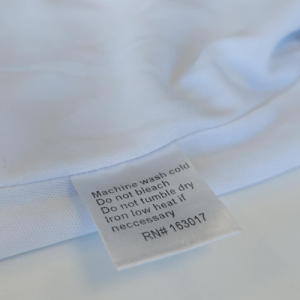
Under the Fair Trading Act, new clothing, household fabrics and furnishings must have a label that details information about how to care for that type of good. Sharing this information with consumers helps them understand how to care for textile goods and the associated costs when making a purchase. By adhering to the care instructions, the items are less likely to get damaged or ruined and are more likely to have a longer lifespan.

The Consumer Information Standards (Care Labelling) Regulations outline all of the product categories which must adhere to care labelling standards, as well as specific products in these categories which are excluded from the regulations.

  • clothing, household textiles, furnishings, upholstered furniture, bedding, mattresses and bed bases
  • piece goods and yarns made from textiles
  • plastics and plastic-coated fabrics
  • suede skins, hides, grain leathers and furs

This is a general summary of requirements. Further information is available at Commerce Commission.

Purchase the standards for your relevant product or service from Standards NZ.

  • Footwear (except hosiery) and textile materials used in the manufacture of footwear.
  • Drapery (floor cloths, dish cloths, dusters, cleaning cloths, and pressing cloths)
  • Haberdashery (ornaments, artificial flowers, sewing and embroidery threads, bra parts, etc.)
  • Non-upholstery furnishings (furniture frame and mechanism covers and linings, oil baize, blinds, awnings, carpets and other floor coverings, lampshades, tapestries, handicraft items, cushions, etc.)
  • Jute products
  • Medical and surgical goods (bandages, dressings, sanitary pads, and materials forming part of manufactured medical and surgical goods)
  • Canvas goods (beach and garden umbrella coverings)
  • Miscellaneous goods (e.g. cords, twines, lashings, garden hoses, toys, umbrellas and parasols, shoelaces, single-use goods, mops, bags and cases, etc.)
  • All second-hand goods

This is a general summary of requirements. Further information is available at Commerce Commission.

Purchase the standards for your relevant product or service from Standards NZ.

Country of Origin

New clothing and footwear must include permanent labels that can be seen by prospective buyers that specify where the product was made. This enables consumers to make informed decisions about the products they buy and use.

Consumer Information Standards (Country of Origin (Clothing and Footwear) Labelling) Regulations 1992 outline the types of products the standards cover, and which items are excluded from the requirement. Regulations also include details regarding how labels must be affixed to regulated items, as well as the formatting and legibility of label text.

  • clothing, household textiles, furnishings, upholstered furniture, bedding, mattresses and bed bases
  • piece goods and yarns made from textiles
  • plastics and plastic-coated fabrics
  • suede skins, hides, grain leathers and furs

Clothing labels must be permanent and visible when inspecting the garment. A label should be attached to the item itself, but if it cannot be seen due to the packaging, display or folding, it should also be included on a removable label or the packaging.

This is a general summary of requirements. Further information is available at Commerce Commission.

Purchase the standards for your relevant product or service from Standards NZ.

  • jewellery
  • handkerchiefs
  • handbags
  • wigs and hairpieces, hair accessories
  • component parts of footwear and clothing
  • kneecaps and ankle supports
  • parts of brassieres, corselete, corsets, braces, suspenders, garters and similar articles

This is a general summary of requirements. Further information is available at Commerce Commission.

Purchase the standards for your relevant product or service from Standards NZ.

Fibre content labelling

To comply with industry standards and regulations, all clothing and fabric products must include labels that clearly list the types of fibres used, along with their respective percentages or quantities. This transparency ensures that consumers are well-informed about the fibre content of their purchases, enabling them to use and care for the products appropriately.

Consumer Information Standards (Fibre Content Labelling) Regulations outline the products which are included and excluded from labelling standards for many textile products. The standards for fibre content labelling include methods of designating and assessing fibre content, as well as specifying the way in which the product must be labelled.

New items made from natural or synthetic textiles by:

  • spinning
  • knitting
  • weaving
  • felting
  • bonding
  • tufting
  • similar processes as above

This is a general summary of requirements. Further information is available at Commerce Commission.

Purchase the standards for your relevant product or service from Standards NZ.

  • Goods made from customer’s fabrics either
    • supplied by the customer, or
    • selected by the customer from a range of fabrics offered by a retailer.
  • Armbands, belts, braces, collars, corsets, garters, suspenders, handkerchiefs and hats.
  • Footwear (except hosiery) and textile materials used in the manufacture of footwear including shoelaces.
  • Household drapery (muslin, cleaning cloths, doilies, gauze, mosquito netting, pressing cloths, serviettes, ticking and tray cloths).
  • All haberdashery (except elastic, elastic threads, ribbons, zips, iron-on binding patches or trim, sewing thread, velcro type fasteners, and curtain making kits).
  • Certain furnishings and furniture such as awnings, backing materials for carpets, cushion covers manufactured from remnants, fibre content unknown, lampshades, matting, tapestries, underfelt, furniture frame and furniture mechanism covers or linings except upholstery fabric covers for the major surfaces of upholstered furniture, and window blinds.
  • Jute products
  • Goods intended for medical and surgical use as bandages, dressings, sanitary pads, and materials forming part of manufactured medical and surgical goods.
  • Canvas goods (beach umbrella coverings, canvas, deckchair covers, duck, garden umbrella coverings, and sail cloth).
  • Industrial cloth (bookbinding cloth, filter cloth, mop cloth, printers’ and signwriters’ cloth, buckram and undertakers’ cloth).
  • Miscellaneous goods (e.g. artificial flowers, bags and cases cords, firemen’s hoses, flags, flex coverings, garden gloves, single-use goods, mops, ornaments, parasols, toys, twine, umbrellas and woven labels.
  • All second-hand goods.

This is a general summary of requirements. Further information is available at Commerce Commission.

Purchase the standards for your relevant product or service from Standards NZ.

Unit pricing for grocery products

To comply with Unit Pricing Regulations that came into effect in August 2023, certain grocery retailers must display the unit price for products. This applies to any grocery retailer with internal floor space of over 1000 square metres and selling the products specified in the regulations (see below).

Consumer Information Standards (Unit Pricing for Grocery Products) Regulations 2023 outline the products which are included and excluded from unit pricing requirements, and specifies the requirements for how unit pricing is displayed. The Commerce Commission also provides a detailed guide to unit pricing regulations for grocery retailers.

The product categories covered by Unit Pricing Regulations are:

  • bread
  • dairy products
  • eggs or egg products
  • fruit
  • vegetables
  • meat
  • fish
  • rice
  • sugar
  • manufacturer-packaged food

Retailers who must adhere to these regulations are:

  • online stores that sell all of the above product categories to consumers
  • physical stores that sell all of the above product categories to consumers and have floor space of at least 1000 square metres

This is a general summary of requirements. Further information is available at Commerce Commission.

Purchase the standards for your relevant product or service from Standards NZ.

A product is excluded from Unit Pricing Regulations when:

  • it is sold as an individual item (not a package of two or more items) and it is not sold by volume, weight, length or area
  • it is part of a bundle of different products being sold for a single purchase price
  • it is one of a number of different products that are sold for the same purchase price (regardless of any differences in volume, weight, length, area or number of items in a package) and for which that price is displayed as applying to all of those products
  • it sold from a vending machine
  • it is sold at a reduced purchase price because—
    • its packaging is damaged; or
    • it is perishable and may deteriorate if not used by a particular date; or
    • it is being discontinued; and
    • it has the reduced purchase price displayed on it (for example, by sticker).

Further exclusions from Unit Pricing Regulations apply to:

  • Stores or individuals who became online retailers of all of the products included in Unit Pricing Regulations for the first time on or after 31 August 2025 and have been selling regulated grocery products for less than 12 moths after 31 August 2025
  • Stores or individuals who became retailers of all the products included in Unit Pricing regulations in a physical store with at least 1000 square metres of floor space for the first time on or after 31 August 2024 and have been selling regulated grocery products for less than 12 months after 31 August 2024.

This is a general summary of requirements. Further information is available at Commerce Commission.

Purchase the standards for your relevant product or service from Standards NZ.

If the purchase price of a regulated grocery product is displayed in a store or online where the product is sold, or in an advertisement for the product, the unit price for the product must also be displayed.

The unit price for a product must be calculated to the nearest cent (with 0.5 cents rounded upwards) on the following units of measurement:

Type of regulated grocery productUnit of measurement
A product sold by volumePer 100 millilitres
A product sold by weightPer 100 grams
A product sold by lengthPer metre
A product sold by areaPer square metre
A product sold by number of items, if displayed purchase price is for 40 or fewer itemsPer item*
A product sold by number of items, if displayed purchase price is for more than 40 itemsPer 100 items
Meat or seafood sold by weightPer kilogram
Fruit or vegetables sold by weightPer kilogram
Herbs, spices, powdered sauces or powdered stocksPer 10 grams
Flavouring essences or food colouringPer 10 millilitres
BeveragesPer litre
NappiesPer nappy
Pet products (other than food) sold by weightPer kilogram
Pet products (other than food) sold by volumePer litre
Toilet paper and paper towels with perforated sheetsPer 100 sheets

*If the required unit of measurement for a product is per item, the type of item may be referred to in the unit price (for example, ‘per teabag’ in a pack of teabags).


The unit price must be displayed:

  • clearly and legibly
  • in a font size no less than 25% of the purchase price
  • prominently, and in close proximity to the purchase price
  • using numerals and a dollar sign
  • in dollars and cents, if the unit price is $1.00 or more
  • either in dollars and cents or in cents, if the unit price is less than $1.00

This is a general summary of requirements. Further information is available at Commerce Commission.

Purchase the standards for your relevant product or service from Standards NZ.

Used motor vehicles

All motor vehicle traders selling used vehicles (except private sellers) must ensure that each vehicle has an accurate and complete Consumer Information Notice (CIN), also known as Supplier Information Notice (SIN), attached. For online sales, the CIN must be prominently displayed within the vehicle’s advertisement.

The CIN provides essential details about the used motor vehicle and the trader, helping consumers make well-informed purchasing decisions. This standardised notice must include specific information to meet regulatory requirements.

Consumer Information Standards (Used Motor Vehicles) Regulations outline the requirements for how the CIN is displayed, formatting and text specifications, and what to do with the CIN after sale.

Regulations require that the CIN:

  • be attached to the motor vehicle to be clearly visible from the exterior of the vehicle by prospective buyers
  • be included on the same Internet page as the offer of sale and the contract of sale, if the vehicle is being sold online
  • be attached to the motor vehicle from the time it is first offered for sale until the time it is sold
  • be in the designated form specified by Schedule 1 of the regulations, and must be clearly legible and adhere to the printing specifications of the regulations (e.g. at least 21 cm wide by 29.5 cm long)
  • be updated with any changes as soon as the changes occur
  • may include a name, logo, design or other information relating to the trader, but must be displayed in the top margin of the CIN in a manner that does not detract from the contents

This is a general summary of requirements. Further information is available at Commerce Commission.

Purchase the standards for your relevant product or service from Standards NZ.

Motor vehicle trader information
  • trader’s name
  • address
  • contact information
  • trader registration number

Sale information
  • Cash price
  • Security interest
  • Make and model
  • Vehicle year
  • Engine capacity
  • Actual distance vehicle has travelled
  • Radio receiver capability
  • Vehicle identification number or chassis number
  • Warrant or certificate of fitness and expiry date
  • Vehicle licence expiry date
  • Confirmation of registration and registration plate number (or confirmation if not registered)
  • Year first registered in New Zealand
  • Re-registered vehicle, if applicable
  • Operating fuel type
  • Road user charges apply
  • Outstanding road user charges

Used imported vehicles
  • year first registered overseas
  • country last registered
  • imported as damaged vehicle, if applicable

This is a general summary of requirements. Further information is available at Commerce Commission.

Purchase the standards for your relevant product or service from Standards NZ.

  • give the buyer a copy of the CIN
  • trader and buyer both sign acknowledgment form that CIN has been provided to buyer
  • for each used motor vehicle, trader must keep copies of the CIN and signed acknowledgment form for six years

This is a general summary of requirements. Further information is available at Commerce Commission.

Purchase the standards for your relevant product or service from Standards NZ.

Water efficiency

In New Zealand, water-using appliances must display water efficiency rating labels when being sold. These labels provide crucial information about a product’s water consumption and efficiency, enabling consumers to make purchasing decisions with regard to sustainability and cost effectiveness.

Consumer Information Standards (Water Efficiency) Regulations specify labelling requirements for certain types of new water-using equipment and outline which products are included in these regulations. Used water-using appliances are not covered by these regulations.

  • showers
  • tap equipment
  • lavatory equipment
  • urinal equipment (except waterless urinals)
  • dishwashers
  • clothes washing machines

This is a general summary of requirements. Further information is available at Commerce Commission.

Purchase the standards for your relevant product or service from Standards NZ.

  • Labels must be clearly visible and easily readable.
  • Labels should be attached to the product or its packaging (the regulations provide specific instructions for labelling of unpackaged items in each product category listed above)
  • For online sales, labels must be prominently displayed within the product’s advertisement.
  • Labels must follow a standardised format as specified by the regulations.

This is a general summary of requirements. Further information is available at Commerce Commission.

Purchase the standards for your relevant product or service from Standards NZ.

  • brand name
  • model identifier
  • water consumption
  • number of star rating or, if applicable, whether the product has a zero star rating or is not star rated
  • rated load capacity, as applicable
  • stated wash programme(s), as applicable

This is a general summary of requirements. Further information is available at Commerce Commission.

Purchase the standards for your relevant product or service from Standards NZ.

Origin of food

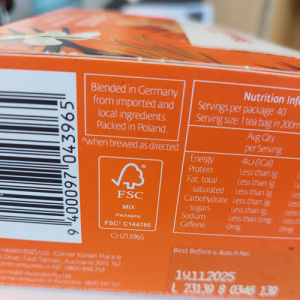
Certain types of food products which are imported into New Zealand must include labels that inform consumers of the country where the food was sourced. Providing this information allows consumers to make informed purchase decisions regarding products they and their families will consume.

Consumer Information Standards (Origin of Food) Regulations specify which food items are included and excluded in the consumer information standards, which details must be communicated to consumers for the regulated food items and how information must be disclosed.

  • cured pork
  • fruit and vegetables, fish or seafood, meat, which are:
    • fresh, frozen or thawed (but would otherwise be fresh), and
    • no more than minimally processed

This is a general summary of requirements. Further information is available at Commerce Commission.

Purchase the standards for your relevant product or service from Standards NZ.

The information disclosed must:

  • be clear and legible text in English or Māori
  • specify the method of collection in the origin country (e.g. grown, raised, caught, etc.)
  • be affixed directly on the item or its packaging, or in signs located next to the item

This is a general summary of requirements. Further information is available at Commerce Commission.

Purchase the standards for your relevant product or service from Standards NZ.

Depending on the product, the label must specify:

  • country or countries in which products were grown
  • country or countries in which animals were raised
  • country or countries in which fish or seafood were caught or harvested

This is a general summary of requirements. Further information is available at Commerce Commission.

Purchase the standards for your relevant product or service from Standards NZ.

Product safety standards

The Fair Trading Act sets out product safety standards regulations to prevent or reduce the risk of injury.

Examples of what product safety standards may include are:

  • the nature of the product and its performance, such as composition, contents, manufacture, processing, design, construction, finish or packaging
  • tests the product should go through during or after manufacture
  • the form and content of markings, warnings or instructions on the product

Businesses are responsible for maintaining awareness of the safety standards for the products they sell, and ensuring that their products meet those standards. You can purchase the standards for your relevant products from Standards NZ.

Be aware that manufacturers in other countries may have different safety standards from New Zealand, so do your due diligence in selecting suppliers from abroad.

We recommend that you take the following actions to ensure your compliance with product safety requirements under the Fair Trading Act:
  • Research the company who manufactures or supplies your products. If possible, seek references from other clients of the supplier.
  • Check the list of recalled products in New Zealand before committing to a purchase agreement with a new supplier.
  • Conduct spot-checking and testing of products from new suppliers to assess compliance with New Zealand safety standards; use a lab that is specifically accredited to conduct testing according to the specific standards required for your product.
  • Carefully review your supplier agreements to understand if support, repairs or compensation will be provided in the event of faults or safety concerns

Watch our webinar on Product Safety and Recalls

Ian Caplin, Principal Advisor with the Ministry of Business, Innovation and Employment’s Consumer Protection team walks us through critical product safety guidance in this episode of Empowering Retail.

The products that currently have mandatory safety standards are:

Many other products are covered by voluntary safety standards for design features and performance requirements. Even if the products you sell do not have mandatory safety standards, you are still required to ensure that your products are safe for use and fit for purpose. We recommend that businesses conduct safety testing even for unregulated products to protect themselves and their consumers from potential risks. Moreover, obtaining safety certification from an accredited lab can significantly enhance customer attraction and retention.

Baby Walkers

Retailers must ensure all baby walkers sold meet mandatory safety standards for design, construction, and performance. These products must pass safety tests and include clear warning labels, as they can pose injury risks by allowing infants to move in ways they otherwise couldn’t on their own.

This applies to the sale or lease of new or second-hand baby walkers:

  • at a shop
  • at a garage sale
  • at a market
  • online.

Product Safety Standards (Baby Walkers) Regulations set sections of American standard ASTM F977-03 as the official product safety standard that suppliers of all new and second-hand baby walkers supplied in New Zealand must comply with.

Baby walkers must:

  • meet general requirements for latches and locking mechanisms, openings, exposed coil springs and protective components.
  • pass tests that show its ability to remain in contact with, and be supported by, the floor.
  • pass tests that show it can withstand a force before tipping over when it is against an immovable object, and that it can remain upright when forces are applied forwards and sideways.

This is a general summary of requirements. Further information is available at Commerce Commission.

Sellers of this product should refer to the full, detailed standards, available for purchase at ASTM International.

Bicycles

To reduce the risk of injury, bicycles sold must comply with strict safety standards. These regulations ensure that bikes are built to meet essential design and performance criteria and include clear warning labels to inform users of potential hazards.

The standards are required for two-wheeled, pedal vehicles which are propelled by human effort only (not an engine), with a wheelbase of 640mm or greater. This includes new bicycles sold or leased in-store, online, at a market, or as a give-away.

Product Safety Standards (Pedal Bicycles) Regulations sets AS/NZS 1927:1998 with amendments as the official product safety standard that suppliers of most new bicycles supplied in New Zealand must comply with.

  • Bicycles must have markings and warning labels which are clear and legible, and adhere to the specified standards.
  • Bicycles which are sold must be accompanied by an owner’s manual, which must include instructions for assembly, use, maintenance and repair.
  • For a partially assembled bicycle, the owner’s manual must be placed in the consumer package and in addition to information about use, maintenance and repair it must include simple, clear and adequate instructions for assembling the bicycle.

Bicycles must meet design requirements relating to:

  • sharp edges
  • wheels
  • projections
  • control cables
  • ground and toe clearance
  • fasteners used to attach or secure components
  • protective guards
  • the drive chain
  • pedals
  • the steering system
  • the seat pillar
  • brakes
  • reflectors and lighting equipment.

Bicycles must meet performance requirements relating to:

  • assembly instructions
  • roadworthiness
  • seat clamp strengths
  • steering stability
  • braking.

This is a general summary of requirements. Further information is available at Commerce Commission.

Purchase the standards for your relevant product or service from Standards NZ.

Children’s nightwear

Mandatory safety standards for children’s nightwear are in place to reduce the risk of burn injuries by ensuring garments meet strict flammability and labeling requirements. These regulations help parents make informed choices and protect children from serious harm in the event of exposure to fire.

Product Safety Standard (Children’s Nightwear and Limited Daywear Having Reduced Fire Hazard) Regulations sets AS/NZS 1249:2014 as the official product safety standard that traders of children’s nightwear must comply with.

The following types of children’s nightwear and limited day wear are covered by the standards specified in Product Safety Standard (Children’s Nightwear and Limited Daywear Having Reduced Fire Hazard) Regulations:

  • pyjamas (whether sold as top and bottom together or as nightwear separates)
  • sizes 3–14 knitted nightwear all-in-ones
  • sizes 00–14 woven nightwear all-in-ones
  • predominantly knitted all-in-one garments in sizes 00–2 made from fabrics that have a pile or nap, or include fabrics with a pile or nap
  • nightdresses and nighties
  • nightshirts
  • dressing gowns
  • bathrobes
  • boxer shorts of a loose style commonly used as nightwear:
  • infant sleepbags with sleeves or arm openings:
  • blankets and towels that incorporate a sleeve or arm opening

This is a general summary of requirements. Further information is available at Commerce Commission.

Purchase the standards for your relevant product or service from Standards NZ.

  • All new and used children’s nightwear covered by the standard must have a fire hazard information label. Clothing made from fabrics that are too highly flammable must not be supplied.
  • The fire hazard label should be easy to see. It must:
    • be on the inside back neck of a top or one-piece garment or, in pants, at the waist, waistband or top of the back seam (all pieces of a set should be labelled)
    • have fire hazard and size information clearly visible on the face side of the label
    • be permanently fixed on the nightwear, so it is unlikely to come off.
  • If the nightwear is sold in packaging which makes it difficult to see and read the label, the packaging must also be clearly marked with the correct fire hazard information.

This is a general summary of requirements. Further information is available at Commerce Commission.

Purchase the standards for your relevant product or service from Standards NZ.

Children’s toys

Mandatory safety standards for children’s toys exist to prevent serious injuries, especially choking hazards, in children under 36 months who are more vulnerable due to their limited ability to expel swallowed objects. These standards ensure toys are appropriately sized, free from easily detachable small parts, and have secure battery compartments to protect young children during play.

This applies to new or second-hand children’s toys that are:

  • sold through any channel except the private sale of second-hand toys
  • ‘give-aways’ such as prizes at sideshow stalls
  • toys which are gifts when buying other goods
  • toys given away in breakfast cereal packets
  • toys sold through internet retail or auction sites – this includes any person in trade supplying second-hand toys.

The Product Safety Standards (Children’s Toys) Regulations sets AS/NZS ISO 8124.1:2002 with amendments as the official product safety standard that traders of children’s toys must comply with.

  • rattles, toy dummies, toy teethers, squeeze toys
  • toys that come attached to a crib, stroller, play-pen or baby carriage
  • push and pull toys, pounding toys, blocks and stacking toys, toys for use in baths, wading pools and sand
  • rocking, spring and stick horses or other figures
  • musical chime toys, jacks-in-the-box, stuffed, plush or flocked animals and other figures
  • games and puzzles
  • dolls
  • toy cars and trucks.

This is a general summary of requirements. Further information is available at Commerce Commission.

Purchase the standards for your relevant product or service from Standards NZ.

  • Toys must not:
    • be of a size that creates a hazard if swallowed or inhaled
    • have small parts designed to be removed from the toy that will create a hazard if swallowed or inhaled
    • have pieces that can break off during normal use or when children play with the toy in a destructive manner that will create a hazard if swallowed or inhaled
    • contain any lead.
  • Toys must undergo and pass tests that simulate normal playing with a toy that:
    • fits with the toy’s instructions for use
    • has been established for that type of toy by tradition or custom
    • is evident from the toy’s appearance
    • tests ‘foreseeable abuse’, such as being dropped or thrown by a child.

This is a general summary of requirements. Further information is available at Commerce Commission.

Purchase the standards for your relevant product or service from Standards NZ.

Cigarette and utility lighters

To reduce the risk of accidental fires, cigarette lighters must meet certain performance, design and labelling standards. Lighters sold in New Zealand must be designed to ensure most children would not be able to operate them.

This applies to new or second-hand disposable and refillable lighters that are:

  • Manufactured, imported, or distributed to retailers
  • Sold by retailers in-store or online
  • Sold by individuals who sell second-hand lighters at markets, auctions, or online

The Product Safety Standards (Cigarette Lighters) Regulations set specific sections of ISO 9994:1995E and American standard CFR 16 Part 1210 with amendments as the official product safety standards that New Zealand retailers must comply with.

In general, cigarette lighters must:

  • be child resistant:
    • automatically reset itself after each ignition
    • not impair safe operation of the lighter when used normally
    • be effective for the lighter’s functional life
    • not be easily overridden or deactivated.
  • comply with certain performance and structural requirements:
    • the flame must be produced by the lighter being deliberately operated by hand
    • the lighter cannot spit, sputter or flare a flame
    • the flame must go out when no longer in use
    • the lighter must have no sharp edges
    • maximum flame heights for non-adjustable lighters are set at:
      • 50mm high for non-adjustable lighters that are not windproof
      • 120mm high for non-adjustable windproof lighters.
    • an adjustable lighter, when used in the normal way, must need a deliberate action by the user to either increase or decrease the flame height.
    • the lighter must also have markings to show a user how to reduce or increase the flame height.
  • meet labelling requirements:
    • the time when the lighter was manufactured (not to exceed a period of more than 31 days); and
    • the manufacturer’s identity, or private label with a code mark or another label by which the seller can identify the manufacturer if the buyer asks for this information.
  • be documented with a certificate of compliance:
    • a statement that the lighters comply with the American Consumer Product Safety Standard for cigarette lighters (16 CFR 1210)
    • the name and address of the manufacturer or importer issuing the certificate
    • the month and year of manufacture
    • the physical address where the lighters were manufactured if this is different to the manufacturer’s address.

This is a general summary of requirements. Further information is available at Commerce Commission.

Purchase the standards for your relevant product or service from Standards NZ and Code of Federal Regulations.

Household cots

To help reduce the risk of injury to babies and young children, household cots sold in New Zealand must meet certain design and construction requirements, pass impact, strength and durability tests and have warning labels attached.

The standards are required for free-standing cots with raised sides and ends that are designed as an enclosed sleeping facility for an infant or child. This includes new or used cots which are designed and intended to be used in the home for a child’s or infant’s sleeping use.

Product Safety Standards (Household Cots) Regulations set sections of AS/NZS 2172:2003 with amendments as the product safety standard that suppliers of new and second-hand cots supplied in New Zealand must comply with.

Cots covered by the regulations must meet the following requirements:

  • All components of the cot must be either permanently fixed, require a tool for putting together or taking apart, or require a method of assembly that cannot be tampered with by a child within the cot.
  • The cot must have specific dimensions:
    • space between bars must not be less than 50mm or exceed 95mm
    • distance between the edges of the mattress and any end or side of the cot must not exceed 20mm
    • distance between the bottom rails (when the cot is closed) and the mattress base cannot be less than 12mm or more than 30mm
    • the distance between the floor and the cot’s bottom rail at its lowest point must not be less than 50mm.
  • There must be no structures or components that could be used by a child to get a foothold or toehold for climbing.
  • The cot’s design and fastenings have to allow free movement of the dropside of the cot – the dropside guides have to be firmly fixed.
  • There must be either two fasteners or a system that requires two separate but simultaneous actions to access the cot.
  • The bottom edge of the lowest rails must not be higher than the top of the mattress base.
  • Nothing on the cot can protrude more than 5mm, unless it is designed so clothing cannot be caught on it.
  • There must be no sharp edges or points on the cot that could risk injury to a child, or that clothing could catch on.
  • New cots must have a swing tag that states the recommended mattress size and the manufacturer’s name and contact details.
  • New cots must come with an information leaflet that provides clear and complete assembly and maintenance instructions. This should include the recommended mattress size, a warning about the correct height adjustment for adjustable cots, the manufacturer’s, importer’s or distributor’s name and contact address and guidance on the general safe use of the cot.
  • There must be manufacturer’s information and warnings relating to the mattress size permanently marked on the mattress base.

This is a general summary of requirements. Further information is available at Commerce Commission.

Purchase the standards for your relevant product or service from Standards NZ.

Multipurpose ladders

To minimise the risk of injury, any multipurpose ladder that is sold in New Zealand must meet the requirements of the safety standard to ensure it has been tested to assess its stability, has labels that are easy to read, have warnings applied regarding misuse and electrical hazards.

The safety standards apply to any new portable ladder that has one or more hinges that are capable of being locked in one or more positions, which allow the ladder to be used as:

  • a single ladder, with or without a stand-off
  • a single or double sided step ladder
  • scaffold or work platform

Product Safety Standards (Multipurpose Ladders) Regulations set AS 1892.1:2018 with amendments as the official product safety standard that New Zealand retailers must comply with.

  • All multipurpose ladders need to be marked with:
    • the details of the importer or manufacturer
    • its working length
    • the maximum load it can carry
    • the standard number (i.e., AS 1892.1:2018)
  • The maximum length of ladders must be:
    • Metal and non-metallic ladders:
      • Single: 9m industrial
      • Extension: 15m industrial
      • Stepladders: 6.1m industrial
    • Timber ladders:
      • Single: 9.2m runged
      • Extension: 15.3m
      • Stepladders: 5.5m industrial or platform

There are separate sections of the standards which apply to metal ladders, timber ladders and reinforced plastic ladders.

This is a general summary of requirements. Further information is available at Commerce Commission.

Purchase the standards for your relevant product or service from Standards Australia.

Sunscreen

Sunscreen products sold in New Zealand must meet mandatory safety standards to ensure that consumers can make informed choices about products that may help protect against cancer or sun-related conditions.

Sunscreen products that are covered by mandatory safety standards include:

  • Products where their primary purpose is to protect the skin from ultraviolet radiation
  • Insect repellents with a labelled SPF of 4 or more
  • Skin care products as defined under the safety standard with a labelled SPF greater than 15.

The Sunscreen (Product Safety Standard) Act 2022 sets out AS/NZS 2604:2012 as the official product safety standard that New Zealand retailers must comply with.

In addition to specific requirements for product testing, sunscreen products covered by the Sunscreen Act must have labels that include:

  • ‘SPF’ or ‘Sun Protection Factor’ with factor 4, 6, 8, 10, 15, 20, 25, 30, 40, 50 or 50+ (no other numbers besides these can be used)
    • A category description can also be included:
      • ‘Low’ for SPF 4, 6, 8 or 10
      • ‘Medium’ or ‘moderate’ for SPF 15, 20 or 25
      • ‘High’ for SPF 30, 40 or 50
      • ‘Very high’ for SPF 50+
  • the words ‘Broad spectrum’ and these words must be smaller than the ‘SPF’ or ‘Sun protection factor’ label
  • the words ‘water resistant’ along with an amount of time of either 40 minutes, 2 hours or 4 hours (no other timeframes may be used)
  • clear instructions on how to use the product, including ‘apply generously to the skin 20 minutes before skin exposure, then reapply frequently, and after swimming or towelling’ or equivalent language.

This is a general summary of requirements. Further information is available at Commerce Commission.

Purchase the standards for your relevant product or service from Standards NZ.

Unsafe goods notices

Under the Fair Trading Act, it is unlawful to supply, advertise or offer to supply any goods that don’t comply with an unsafe goods notice. Unsafe goods notices refer to products that are deemed unsafe for use or consumption, such as candles with lead in them, or chainsaws without a chain break. It is good practice to check the current unsafe goods notices before importing new products, as unsafe goods can be seized by Customs and forfeit.

It is your responsibility as the business owner to maintain awareness of current unsafe goods notices, as published by the Minister of Commerce and Consumer Affairs in the New Zealand Gazette, the official government newspaper for New Zealand.

Need more information?

We understand that navigating the Fair Trading Act can feel overwhelming. If you would like clarification on anything in this guide, or if you would like advice on a specific situation, do not hesitate to email us at [email protected] or give our Advice Service a call on 0800 472 472 (or 1800 128 086 from Australia).

THANK YOU TO OUR PARTNERS

Would you like one of our team to give you a call? Let us know and we will get back to you.

Name